Over the past two weeks, members of the cryptocurrency community have been discussing the concept of non-fungible tokens (NFT), known as Ordinals. Since the 3.96 MB block (#774,628) was mined, there has been a significant increase in ordinal enrollments on the Bitcoin blockchain. Ordinal Inscriptions on the Bitcoin Blockchain Spark Debate in the Crypto Community The controversial NFT concept, known as ordinal numbers, which the Bitcoin blockchain uses to create mint inscriptions, has been a hot topic of late. Since its launch, there has been a significant increase in the number of entries being added to the Bitcoin blockchain without permission. These include JPEG images, NFTs from other blockchains like Bored Apes, and even a DOOM video game file. The biggest…
Over the past two weeks, members of the cryptocurrency community have been discussing the concept of non-fungible tokens (NFT), known as Ordinals. Since the 3.96 MB block (#774,628) was mined, there has been a significant increase in ordinal enrollments on the Bitcoin blockchain. Ordinal Inscriptions on the Bitcoin Blockchain Spark Debate in the Crypto Community The controversial NFT concept, known as ordinal numbers, which the Bitcoin blockchain uses to create mint inscriptions, has been a hot topic of late. Since its launch, there has been a significant increase in the number of entries being added to the Bitcoin blockchain without permission. These include JPEG images, NFTs from other blockchains like Bored Apes, and even a DOOM video game file. The biggest…
The debate over the meaning and impact of ordinal inscriptions on the Bitcoin blockchain is heating up –
Over the past two weeks, members of the cryptocurrency community have been discussing the concept of non-fungible tokens (NFT), known as Ordinals. Since the 3.96 MB block (#774,628) was mined, there has been a significant increase in ordinal enrollments on the Bitcoin blockchain.
Ordinal inscriptions on the Bitcoin blockchain spark debate in the crypto community
The controversial NFT concept known as Ordinal numbers which uses the Bitcoin blockchain to Mint inscriptions, has been a hot topic lately. Since its launch, there has been a significant increase in the number of entries being added to the Bitcoin blockchain without permission. These include JPEG images, NFTs from other blockchains like Bored Apes, and even a DOOM video game file. The biggest surprise was at the Luxor Mining Pool mined a 3.96 MB block ( #774,628 ), which contain Order inscription #652 a JPEG image of an assistant.
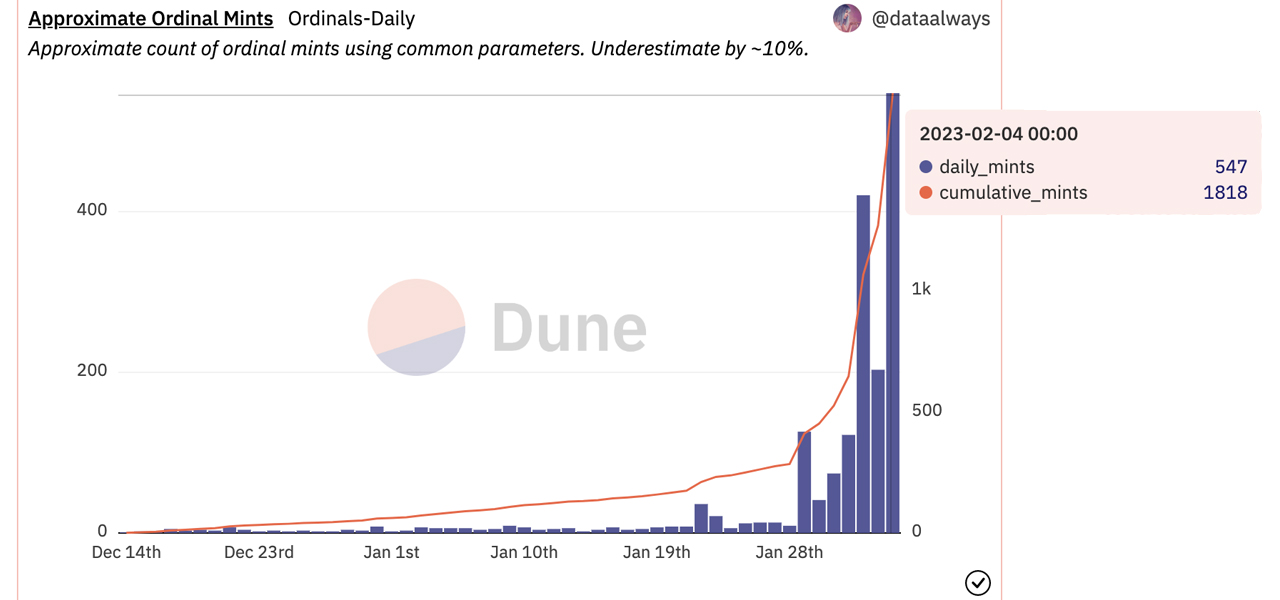
Die Diagramme zeigen einen Anstieg der Ordinal Mints seit dem 2. Februar, 3,96 MB-Block, der von Luxor abgebaut wurde.
Since this block was mined, the number of atomic numbers minted has continued to increase, and the minting rate has increased significantly since the project began. Accordingly statistics By Dune Analytics, fewer than 10 atomic numbers were minted daily until January 20, 2023. By January 22, the number increased to 36. On January 29, 2023, there were over 100 mints, and over the next two days there were just under 75. After the Luxor block with the inscription #652 was produced, the number of mints increased to 420 on February 2, 2023, and the next day 203 ordinal inscriptions were recorded.
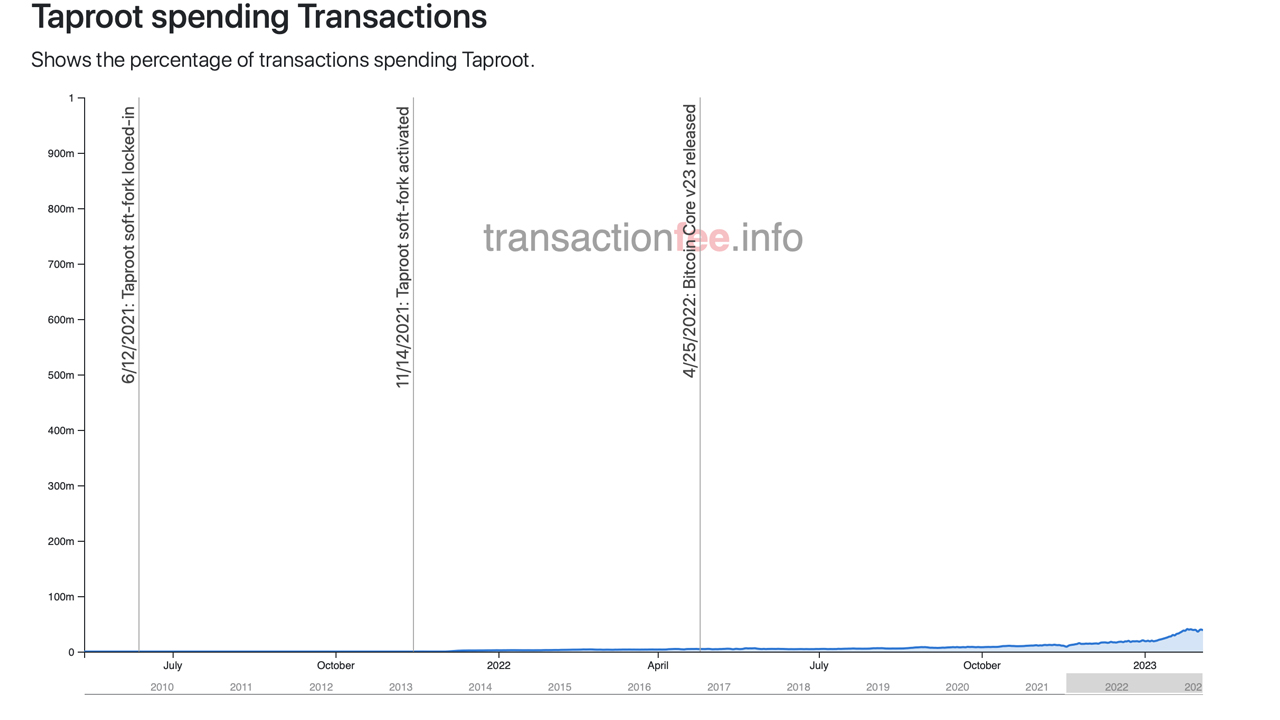
Taproot-Ausgabentransaktionen haben in diesem Jahr stark zugenommen.
There were also a number of large blocks that didn't quite reach 4MB, but were close to the 3MB range. For example, block heights #774,997 And #774,996 were near the 3MB range, larger than the previous record before Luxor's block of 2,765MB ( #748,918 ) mined on August 11, 2022. Despite the fact that February 4, 2023 is not yet over, 547 Ordinal inscriptions have already been added to the Bitcoin blockchain on Saturday, marking the highest daily number of Ordinal mints to date. Currently, the proportion of block space used by ordinal inscriptions is not significant, but it is growing every day.
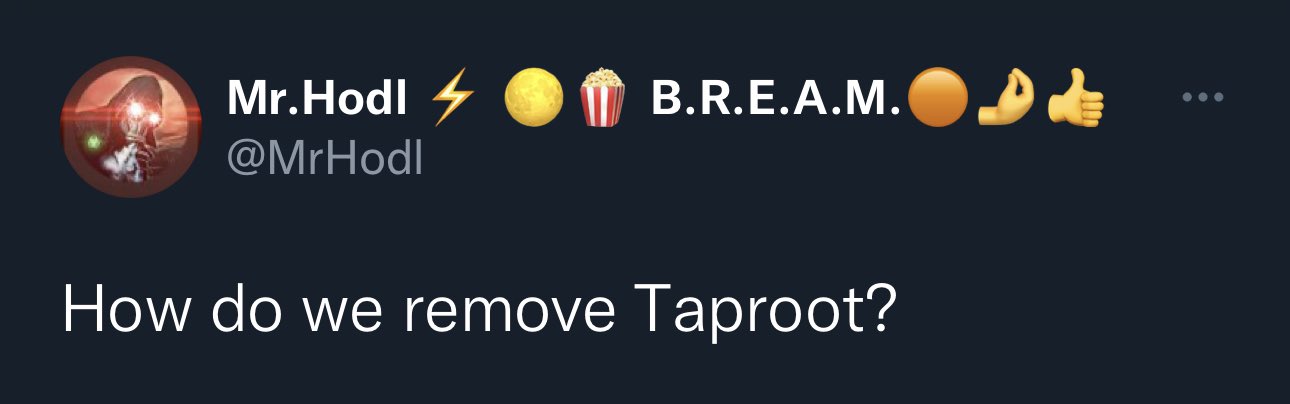
Bitcoin maximalists and small block advocates express their concerns about the ordinal inscriptions and share their opinions on the matter. Bitcoin advocate Jimmy Song has claims that the Luxor mining pool is being “punished by the market” and suggested that smaller blocks may be required. “Unpopular Opinion,” song tweeted, “If inscriptions bloat the chain, a reduced block size must be considered.” The issue was criticized by Bitcoin developer Luke Dashjr, who did this often stated that ordinal inscriptions resemble the “attack on Bitcoin”.
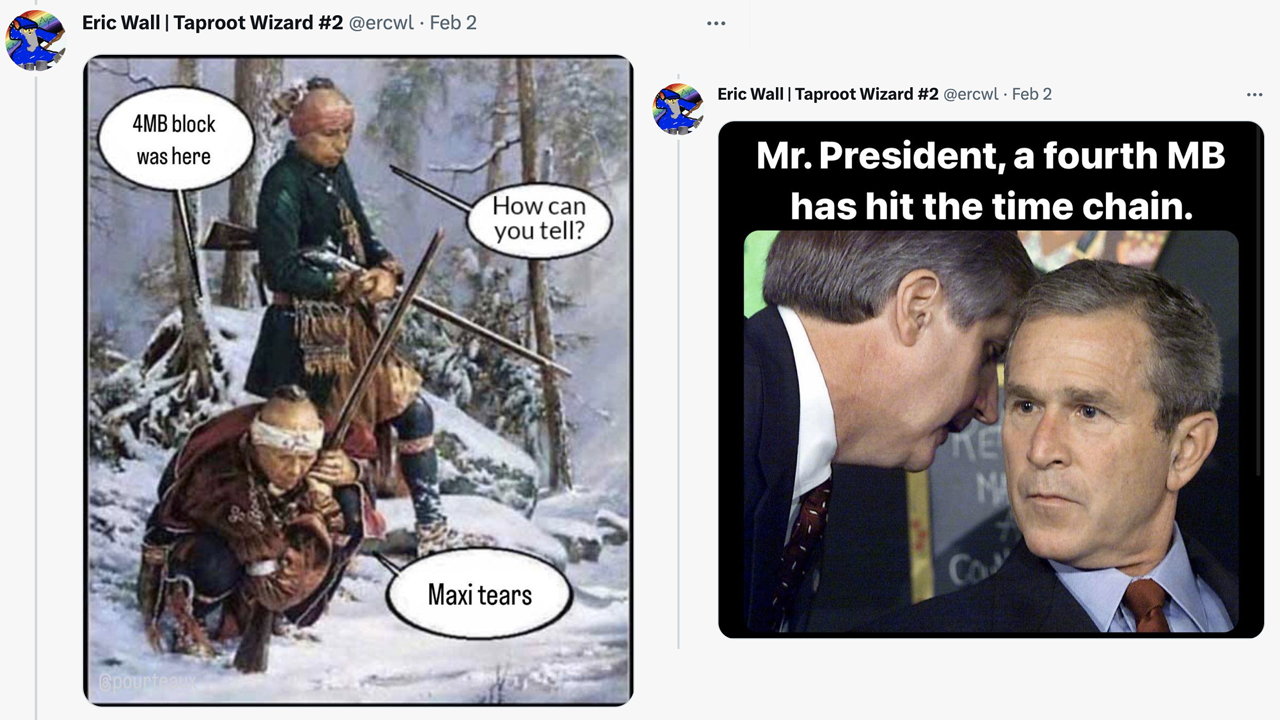
Krypto-Unterstützer und „Taproot Wizard #2“, auch bekannt als Eric Wall, hat eine große Anzahl von Memes zu diesem Thema geteilt.
Adam Back from Blockstream also commented on the situation and gave his opinion. “Of course you can’t stop them.” Bake called. "Bitcoin is designed to be censorship-resistant. That doesn't stop us from mildly commenting on the sheer waste and stupidity of coding. At least do something efficient. Otherwise, it's just more evidence of the consumption of block space." Others have ordinal numbers as “ Spam attack “, and some have called to developers to address the problem with a soft fork. “Ordinals are an attack on Bitcoin,” Derek Ross tweeted. “It’s orchestrated by known bad actors,” he added.
Many others disagree with calling order inscriptions an attack. Crypto advocate Udi Wertheimer tweeted: "Bitcoin maximalists are not real Bitcoiners. Real Bitcoiners are a happy bunch who like to have fun. Hal Finney, for example, would have loved the [Taproot Wizards] Bitcoin NFTs. Let's make Bitcoin fun again." Wertheimer shared an old email from Hal Finney that was sent to the Cypherpunks mailing list that discussed “cryptographic trading cards.” Eric Wall, digital currency supporter emphasized This week, no Bitcoin maximalist celebrated the increase in Taproot adoption.
“After 14 months of sub-3% Taproot adoption, this week we suddenly hit 99.5% Taproot adoption and not a single Bitcoin maximalist celebrated,” Wall said. "I don't understand you. What do you want?" Wall added.
What do you think about the recent rise of ordinal inscriptions on the Bitcoin blockchain? Are they a positive or negative development for the future of the Bitcoin network? Share your thoughts in the comments section below.
Jamie Redman
Jamie Redman is the news director at Bitcoin.com News and a financial technology journalist based in Florida. Redman has been an active member of the cryptocurrency community since 2011. He is passionate about Bitcoin, open source code and decentralized applications. Since September 2015, Redman has written more than 6,000 articles for Bitcoin.com News about today's emerging disruptive protocols.


 Suche
Suche
 Mein Konto