

 Suche
Suche
 Mein Konto
Mexican company launches blockchain-powered COVID-19 test certificates
The COVID-19 crisis panic appears to be dissipating after almost two years; However, governments around the world are still looking for tools to control their expansion and allow their citizens to return to normal life. A Mexican company is using blockchain technology to improve the reliability of COVID-19 diagnostic tests by using cryptography and blockchain's real-time verifiability to prevent counterfeiting and fraud. Fighting COVID-19 with decentralized technology Medical services company MDS has launched a rapid test application and interpretation service and home PCR sample collection specifically tailored to COVID-19, according to a report by Hispanic news agency iProUP. The results will be 24…
Mexican company launches blockchain-powered COVID-19 test certificates
The COVID-19 crisis panic appears to be dissipating after almost two years; However, governments around the world are still looking for tools to control their expansion and allow their citizens to return to normal life.
A Mexican company is using blockchain technology to improve the reliability of COVID-19 diagnostic tests by using cryptography and blockchain's real-time verifiability to prevent counterfeiting and fraud.
Fighting COVID-19 with decentralized technology
According to a report by Hispanic news outlet iProUP, medical services company MDS has launched a rapid test application and interpretation service and at-home PCR sample collection specifically tailored for COVID-19. The results are delivered physically and digitally 24 hours later and are certified using blockchain technology to ensure the execution of the test and the authenticity of the results in real time.
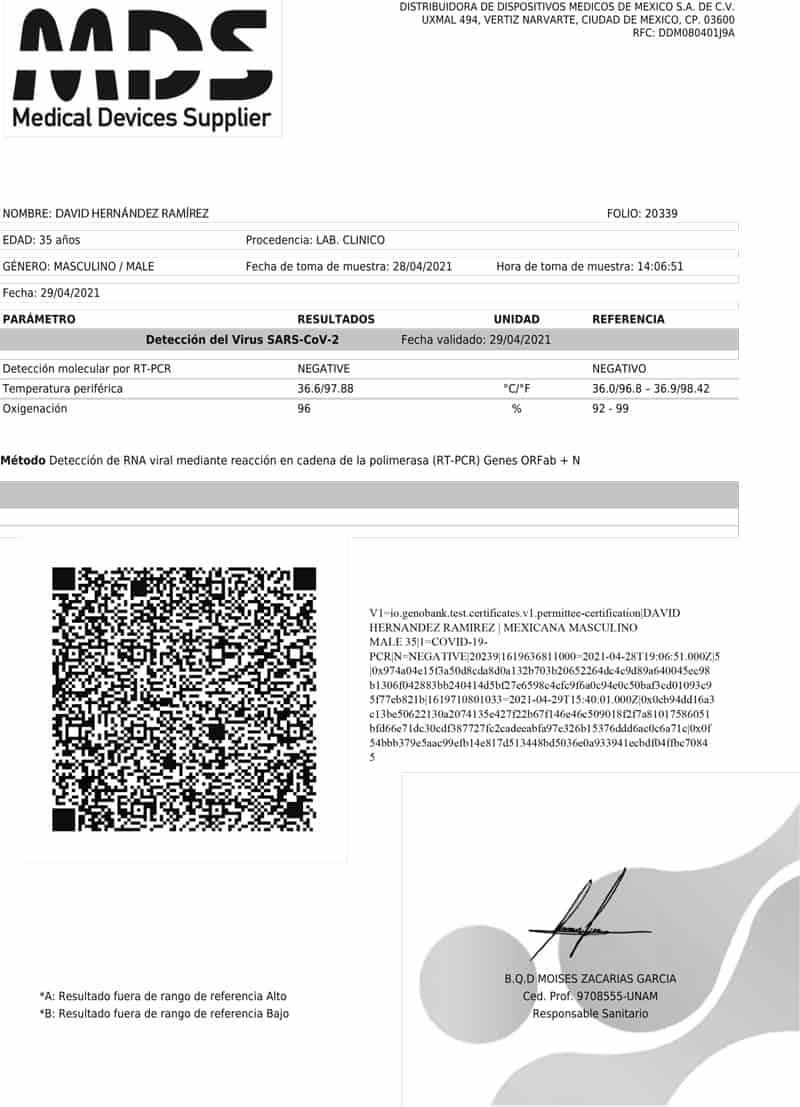 Representation of a digital certificate protected with blockchain technology. Image: MDS
As explained on its website, MDS creates a unique hash associated with the results of each test and generates a QR code associated with a digital certificate containing personal information of the person who performed the test, the results obtained, the physician responsible for administering the test, and the date the test was performed.
To avoid falsification of negative results, we have started certifying the SARS-CoV-2 detection tests using blockchain technology and cryptographic signature, which protects the information in a unique, immutable and immutable QR code that can be verified worldwide.
Mexico: Pro-Blockchain, Anti-Bitcoin
Mexico is one of the Latin American countries where the application of blockchain technology has well-known use cases that go beyond money.
As an example, the local Quintana Roo convention in Cancun, Mexico experimented with this Implementation of the avalanche Blockchain to digitize local public administration records. The project was successfully implemented in March and cost 600,000 Mexican pesos ($290,000).
But Congress decided this week do not extend the contract on the grounds that the use of blockchain is “overqualified” for the needs of the legislature, i.e. the costs outweigh the benefits.
Likewise, the National Chamber of Commerce (CANACO) of Querétaro, Mexico, had already announced the availability of a digital vaccination certificate issued in collaboration with blockchain company Xertify that would allow locals to digitize their physical certificates issued by authorities after a payment of about 400 pesos.
However, when it comes to financing, the use of cryptocurrencies – especially Bitcoin – does not enjoy the same support from the authorities.
The country's central bank already has an initiative stopped from the President of Banco Azteca to offer Bitcoin compatibility, and took action against 12 cryptocurrency exchanges for links to criminal cartels. Just last week, the country's president even ruled out the use of Bitcoin as legal tender.
So, at least for now, the financial revolution and the blockchain revolution in Mexico will follow two very distant paths.
.